SQM Treatments for Blueberries: Boosting Productivity and Quality
Blueberry (Vaccinium spp.) is a crop that is expanding globally, with high demand in Europe and the United States. To achieve higher quality, larger and firmer fruit, proper agronomic management is necessary to ensure acidic soil, balanced nutrition, and an efficient fertilization strategy.
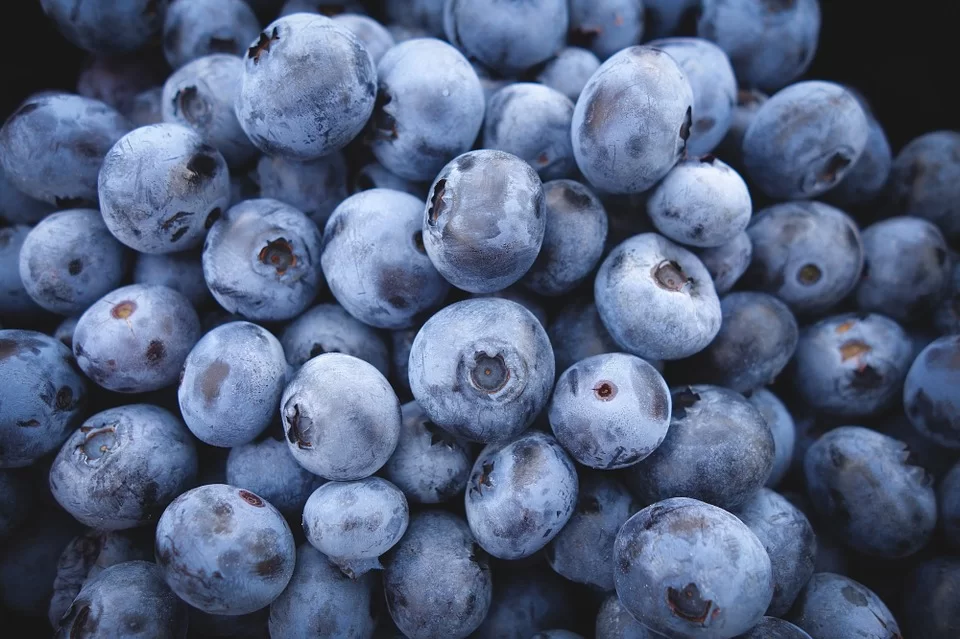
In this area, SQM has established itself as a strategic partner for blueberry producers, offering fertilizers with high solubility and purity.
This allows for maximized productivity and improved fruit quality, while also ensuring a longer post-harvest life for international markets.
How does SQM contribute to blueberry crops?
- SQM drives the blueberry industry forward with nutritional solutions tailored to different soil types and climatic conditions.
- Acidic soil (pH 4-5.5) is essential for successful cultivation, and SQM offers Elemental Sulfur to correct pH levels.
- SQM’s water-soluble fertilizers ensure rapid and efficient absorption of key nutrients such as Potassium, Nitrogen and Calcium.
- The use of SQM nutritional programs helps to obtain larger, tastier and firmer fruits.
Types of Blueberries and their management
Highbush Blueberry (tall shrub):
- Self-fertile, can be planted as a single cultivar.
- Cross-pollination with 2 or 3 varieties improves fruit size and earliness.
- Produces higher quality fruit in terms of flavor and firmness.
Rabbiteye Blueberry:
- Not self-fertile, requires cross-pollination with simultaneously flowering cultivars.
- Advantages: less demanding in terms of soil, more tolerant to alkaline pH, heat, and drought.
- Although of lesser economic importance, it is key in areas with short winters.
In both cases, the nutritional contribution of SQM at critical stages such as flowering and fruit development significantly improves yield.
Soil and nutrition in blueberry growing
Soil is a determining factor in blueberry growing:
- Blueberries prefer acidic (pH 4-5.5), sandy or sandy loam soils with good aeration and drainage.
- They need high water retention but with sufficient oxygenation to prevent root asphyxia.
When the soil pH is higher than optimal, nutrient availability is reduced.
In this scenario, SQM offers solutions such as elemental Sulfur, an efficient and economically viable alternative for acidifying the soil and improving nutrient absorption.
In addition, SQM’s water-soluble fertilizers allow for precision management in fertigation, ensuring a constant supply of:
- Potassium (K): improves fruit firmness and size.
- Nitrogen (N): promotes vegetative growth and flowering.
- Calcium (Ca): essential for firmness and post-harvest life.
Nutritional Information
Balanced nutrition in blueberries and berries is key to ensuring healthy root and aerial growth, allowing carbohydrates to accumulate and achieve quality harvests.
To design an efficient plan, it is necessary to know the demand for nutrients in terms of quantity and type, as well as the role that each element plays in the growth, yield, and quality of the fruit. Each berry species has different nutritional needs, with specific optimal foliar levels that must be monitored.
Annual crop growth depends on factors such as climate, soil, and agronomic management, which determine different requirements for sustaining the formation of tissues, leaves, shoots, roots, and fruit.
In this process, the nutrients exported by the orchard—mainly through fruit and pruning debris—represent the basis for calculating the appropriate fertilization doses, while leaves and roots are usually recycled into the soil.
As the plant increases its production, its demand for Potassium also increases, as the fruit extracts a high amount of this nutrient.
| Nutrient | Extraction (Kg/ton fruit) | Critical leaf level (%) |
|---|---|---|
| Blueberry | Blueberry | |
| N | 4.7 | 1.8 |
| P | 0.5 | 0.12 |
| K | 4 | 0.35 |
| Ca | 1.4 | 0.4 |
| Mg | 0.8 | 0.12 |
Therefore, knowing the concentration and evolution of nutrients in tissues during the crop cycle allows fertilizers to be applied at the right timing and in the precise amounts, ensuring optimal production in terms of volume and quality.
In berry crops, the most extracted nutrients are Potassium, Nitrogen, and Calcium, which explains their direct impact on fruit yield and quality.
Potassium is essential for size and firmness, Nitrogen promotes vegetative growth, and Calcium ensures resistance and longer post-harvest life.
| Nitrogen | |
|---|---|
| Absorption method | NO3- y NH4+ |
| Plant Function | Protein, chlorophyll, and enzyme components. Stimulates vegetative growth. |
| Deficiencies | Generalized chlorosis due to reduced chlorophyll production. |
| Excess | Excessive vegetative growth. Soft and succulent tissues. Soft fruit. |
| Nitrogen levels requirements for this type of crop are not high; it is important during the vegetative development and post-harvest stages. An excess of this nutrient causes serious fruit-quality problems, producing soft fruit that is highly susceptible to mechanical damage and diseases. |
|
| Potassium | |
|---|---|
| Absorption method | K+ |
| Plant Function | Osmotic regulation and sugar transport to the fruit. Activates more than 60 enzymatic processes. |
| Deficiencies | Light-green leaves with marginal necrosis and wilting. Reduced fruit size and consistency. Low soluble solids levels (Brix). |
| Calcium | |
|---|---|
| Absorption method | Ca++ |
| Plant Function | Provides cell firmness and structure; cementing of cell walls. Structure and permeability of cell membranes. |
| Deficiencies | Death of growing tips in roots and leaves. Weakened stems. Tissue firmness problems, especially in fruits, due to calcium deficiency. |
| The effect of this nutrient on berries is of utmost importance in fruit quality, because berries are highly perishable and, due to the way they are marketed, post-harvest shelf life becomes a critical factor. A good supply of Calcium to the plant and fruit plays a fundamental role in this, especially with regard to the transport and durability of the fruit for fresh-market commercialization. It should be noted that Calcium absorption by the plant occurs early on until the fruit is set and photosynthetically active. From this point onwards, Calcium absorption decreases and generally does not reach the fruit, making it necessary to develop a strategy for foliar application of Calcium to the crop. |
|
| Boron | |
|---|---|
| Absorption method | BO3, H2BO3, HBO3 |
| Plant Function | Enzyme activator. Effect on pollen tube fertility.. |
| Deficiencies | Small, deformed, light-green to bronzed leaves; because Boron has low mobility in plants, symptoms appear in young leaves first. Low fruit set, resulting in fewer and/or deformed fruits. |
Fresh and frozen markets demand strict quality parameters:
- Appearance: uniform color, adequate size, good shape, and absence of defects.
- Firmness: key for transport and shelf life.
- Flavor: soluble solids, balanced acidity, and aromatic compounds.
- Nutritional value: aporte de vitaminas A y C, entre otros antioxidantes.
To meet these standards, balanced nutrition in berries is recommended, considering:
- Adjusting the nutritional plan to the expected yield with a balance of macro and micronutrients.
- Maintaining adequate ratios between cations (Ca/K, Ca/Mg, and (Mg+K)/Ca).
Using soluble, chlorine-free sources of Potassium. - Rely on diagnostic tools such as soil and leaf analysis, suction probes, or chlorophyll meters.
- Fractioning nutrient application according to the plant’s stage of extraction.
- Implementing precision fertigation principles, ensuring efficiency and sustainability.
An efficient fertilization plan for blueberries and berries must include both macronutrients and micronutrients, applied in the correct dosage and at the right time.
SQM, through its Specialty Plant Nutrition (SPN) product line, offers high-purity soluble alternatives for fertigation, soil or foliar applications, ensuring greater efficiency and profitability in cultivation.
Fertigation is based on agronomic principles such as Liebig’s Law of the Minimum, which states that the lack of a single nutrient limits total yield.
Therefore, when choosing soluble fertilizers, it is key to consider their solubility (ability to dissolve in water), their electrical conductivity (EC), which reflects the effect on soil salinity, and the pH in solution, since depending on the type of soil and crop, acidic, neutral or alkaline reaction products are required.
Based on these parameters, SQM designs specific nutritional plans for blueberries in full production, optimizing the use of water and nutrients through precision fertigation.
This allows producers to obtain larger, firmer fruits with a longer post-harvest life, meeting the demanding standards of the international market.
Nutritional Plan for Blueberries with Fertigation in Full Production:
| Fertigation Program for Blueberries Yield between 6 and 10 t/ha | |||||||
|---|---|---|---|---|---|---|---|
| Phenological Stage | Product to be applied | Dose | Nutrient Supply (kg/ha) | ||||
| (Kg/ha) | N | P2O5 | K2O | MgO | CaO | ||
| Bud Break to Fruit Set | Ultrasol® Multi-purpose (18-18-18) | 50 | 9 | 9 | 9 | 0,5 | 0,6 |
| Ultrasol® Calcium (Calcium nitrate) | 50 | 7 | 13 | ||||
| Fruit Set to Harvest | Ultrasol® Producción (13-6-40) | 100 | 13 | 6 | 40 | – | – |
| Harvest to Leaf Fall | Ultrasol® Desarrollo (18-6-18) | 100 | 18 | 6 | 18 | 2 | 3 |
| Ultrasol® Calcium (Calcium nitrate) | 50 | 7 | 13 | ||||
| Total Supply | 350 | 54 | 21 | 67 | 2 | 29 | |
In the cultivation of blueberries and other berries, water management is crucial for growth and productivity.
Factors such as application time, infiltration rate, and irrigation frequency must be adjusted to the soil type, the phenological stage of the crop, and the evapotranspiration of the plant. Both excess and lack of water have negative effects on fruit development and quality.
The greatest water absorption occurs near the stem, in the first 20 to 30 cm of the soil profile, so maintaining adequate moisture in that area is essential.
Water requirements vary according to climate and agroecological region, which means that irrigation programs must be adjusted to local conditions.
Blueberries lack root hairs, which limits their natural absorption capacity and makes them highly sensitive to drought.
Therefore, a drip irrigation system is recommended to maintain a constant level of moisture, especially during the critical stages of growth and fruit ripening, when water demand is at its highest.
Salinity refers to the concentration of salts present in the soil or in a nutrient solution. It is measured by electrical conductivity (EC), expressed in mmhos/cm: the higher the value, the greater the concentration of salts in the soil water.
Berries, including blueberries, are crops that are highly sensitive to high levels of electrical conductivity. A solution that is too concentrated in salts interferes with root absorption, directly affecting growth and yield.
When the concentration of salts in the soil water is higher than inside the plant cell, water absorption is prevented. As a result, the plant cannot hydrate properly and ends up showing symptoms of water stress and wilting, even when there is sufficient water available in the soil.
| E.C. (mmhos/cm) at which the yield decreases by | |||
|---|---|---|---|
| 10% | 25% | 50% | |
| Blueberry | 1,0 | 1,5 | 2,0 |
Blueberry tolerance limits to salinity, Source: (Hirzel and Rodriguez 2003)
| Parameter | Quantity | Unit |
|---|---|---|
| Salinity (EC) | 1,2 | mmhos/cm |
| Chlorides | 200 | ppm |
| Boron | 0,5 a 1,0 | ppm |
| Sodium | 150 | ppm |
To achieve efficient nutrition in blueberries through fertigation, it is essential to consider the phenology of the crop.
Organizing each stage of development over time, according to the area, allows us to define which nutrients to apply and in what quantity, ensuring a timely supply along with water.
- Dormancy: The plant enters a metabolic recess, without consuming water or nutrients. It only uses reserves stored in chemical compounds.
- Activation: After accumulating hours of cold, starches are transformed into sugars. Nutrients are mobilized to buds and shoots thanks to internal reserves.
- Sprouting: The first leaves appear and the plant begins to absorb water and nutrients from the soil.
- Development: High cellular activity and formation of new organs. Calcium is key, as it integrates into the plant’s structures with high mobility in this phase.
- Growth: Increase in organ size, greater demand for water and nutrients, especially Nitrogen, with strong dependence on external supply.
- Flowering: Maximum root absorption of water and nutrients. Potassium is essential because it transports carbohydrates to the reproductive organs.
- Fruit-Setting: Pollination marks the beginning of fruit filling.
- Fruit filling: Stage of greatest demand for nutrients and water, especially Potassium, which is vital for fruit size and quality.
- Rippening: The fruit reaches its maximum size and begins to change color. It is the main organ demanding photosynthates.
- Harvest: Removal of fruit according to commercial parameters of color, firmness, and flavor.
- Post-harvest: Root activity is reactivated and reserves are accumulated in roots and wood. This is a key time to apply nutrients and prepare the plant for the next season.
Related newsSee all news →




Rate certificates
Beginning with tax year 2020, Professional Fees Certificates must be requested by email, indicating your name and national identity card number.
Email us at [email protected] to access this information.

Supplier consultation
Dear suppliers:
If you have any questions regarding Purchase Orders (POs), please send us the document in PDF or JPG format (photograph) to the following email address: [email protected].
Please ensure that the PO is legible, especially the following fields: Company Name, order number, and the buyer’s name and contact details.
We will respond to your inquiries within 24 hours.