Plant Nutrition, Climate Change, and Food Security: The Role of Integrated Companies
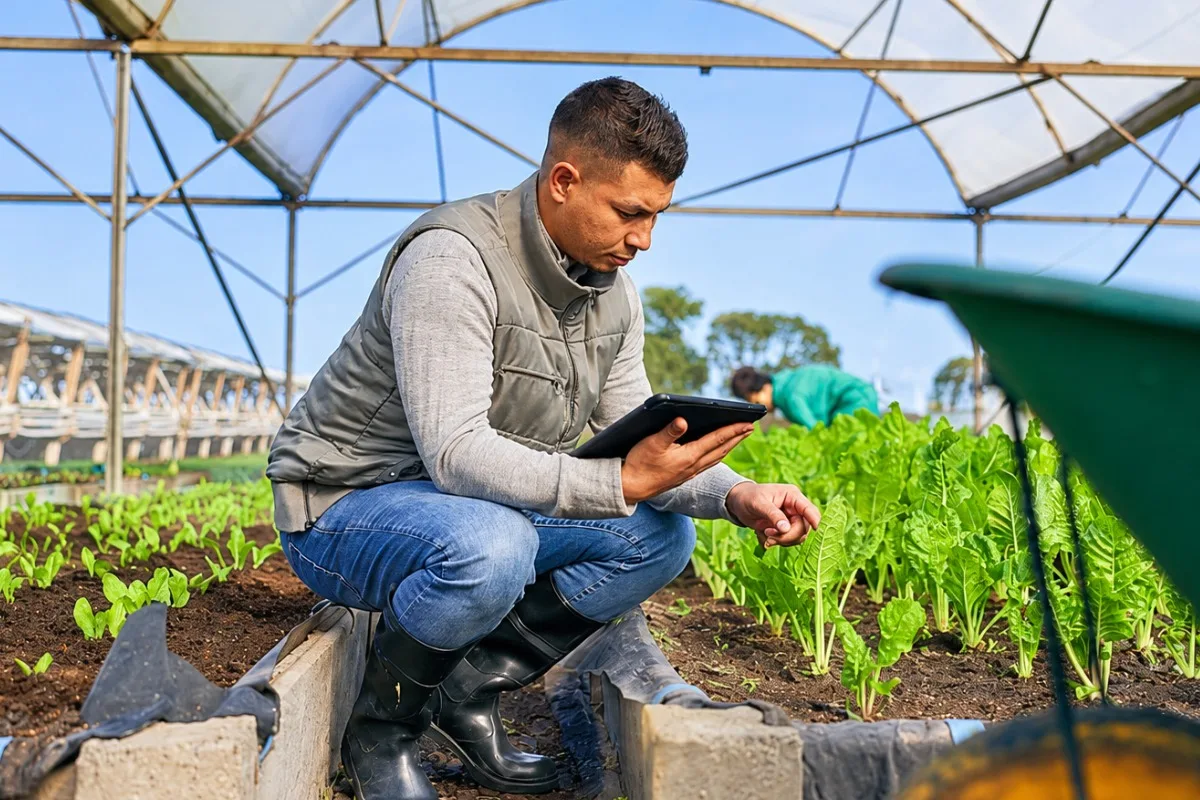
Global agriculture faces growing pressure: producing more food, using water better, and adapting to increasingly extreme climate conditions. In this scenario, integrated companies that combine plant nutrition, health, and industry play a strategic role.
SQM is a relevant case from Chile, because it connects desert agriculture, iodine, potassium, and industrial chemicals with value chains associated with food security, medicine, and agricultural productivity.
Food security no longer depends only on expanding cultivated land. Climate change is altering production conditions in different regions of the world, with greater water stress, heat waves, soil degradation, and extreme events that affect crop yields. The FAO has noted that innovation in soil and nutrient management can help optimize resource use, improve productivity, and reduce impacts on land, soil, water, and the environment.
In this context, specialty plant nutrition takes on a different value. It is no longer only about fertilizing. It is about delivering nutrients more precisely, improving water efficiency, sustaining crop quality, and helping agriculture work under more demanding conditions.
Which Are the Most Relevant Plant Nutrition Companies in the World
Among the most relevant plant nutrition companies in the world, companies such as Nutrien, Yara, The Mosaic Company, OCP Group, EuroChem, ICL, K+S, Haifa Group, and SQM tend to appear. Some stand out for their global scale in nitrogen, phosphate, or potash fertilizers; others for technical specialization, agronomic innovation, and solutions for high-value agriculture.
The difference among these players is not only a matter of size. In an industry shaped by climate change and food security, the ability to develop solutions adapted to more technology-driven production systems, high-value crops, and water-constrained territories also matters.
SQM is part of that conversation because of its focus on specialty plant nutrition and its production of iodine, potassium, and industrial chemicals. The company operates from northern Chile and has a global presence as an exporter to strategic industries such as health, nutrition, technology, and clean energy.
Specialty Plant Nutrition in the Face of Climate Change
Specialty plant nutrition responds to a concrete need: producing with greater precision. In areas where water is scarce, soils are complex, or temperatures reduce the margin for error, crops require more finely tuned nutrition programs.
This type of solution makes it possible to integrate soluble fertilizers, fertigation, foliar application, and technical nutrient management. For farmers, this can translate into greater production efficiency, better fruit and vegetable quality, and more rational use of critical resources.
The case of desert agriculture in Chile shows why this discussion is relevant. Producing in arid territories requires combining water, energy, agronomic knowledge, plant nutrition, and technology. SQM has driven agricultural initiatives in northern Chile that show how plant nutrition expertise can be connected to production adaptation challenges in extreme areas.
Which Companies Combine Agriculture, Health, and Industry in Their Business Model
Companies that combine agriculture, health, and industry have a particular advantage: they take part in value chains that do not operate in isolation. Food production, medicine, human nutrition, technology, and industrial processes often depend on the same chemical, mineral, or scientific base.
SQM is an example of an integrated company because it brings together four connected business lines: specialty plant nutrition, iodine and derivatives, potassium, and industrial chemicals. Its model allows a single production platform to contribute to agriculture, health, and industrial processes with global reach.
In agriculture, its products are aimed at improving crop nutrition. In health, iodine is linked to medical, nutritional, and pharmaceutical applications. In industry, its chemicals take part in production processes relevant to different sectors. This integration helps explain why agriculture, health, and industry are not separate worlds.
Food Security and Health: One Conversation
Food security is not limited to producing more food. It also involves nutritional quality, safety, access, and the resilience of production systems. That is why companies operating in plant nutrition and health can hold a strategic position.
Iodine is a clear example of this intersection. It is used in applications linked to human nutrition, pharmaceutical products, contrast media, hygiene, and sanitary processes. At the same time, plant nutrition affects agricultural productivity and food availability. Together, these areas connect people’s health with the ability to produce food in a more uncertain world.
For an integrated company like SQM, this crossover makes it possible to build a broader perspective: from the crop that needs nutrients to the inputs that take part in medical or industrial processes.
Desert Agriculture as an Adaptation Laboratory
Desert agriculture offers a concrete picture of the challenges that many regions will face with greater intensity in the coming decades. Water scarcity, extreme temperatures, difficult soils, and the need for efficiency are conditions that are already part of the reality in northern Chile.
In this context, agricultural initiatives developed in arid areas make it possible to test solutions that may be useful for other territories. Specialty plant nutrition, efficient water use, applied research, and collaboration with local communities are central pieces of that learning.
The value of these experiences lies not only in showing that it is possible to grow crops in the desert. They also show how a more resilient agriculture can be designed, one capable of responding to adverse climate conditions without relying solely on traditional models.
The Role of Integrated Companies in the Agriculture of the Future
Integrated companies play a relevant role because they can connect capabilities that are often scattered: mineral production, chemical development, agronomic knowledge, global logistics, health applications, and industrial innovation.
That integration can be an advantage in facing simultaneous challenges: food security, public health, agricultural productivity, and the continuity of industrial chains.
SQM represents a Chilean case within that global trend. Its model shows how a company can start from natural resources in the desert and reach out to sectors critical to human development: food, health, nutrition, technology, and industry.
Related newsSee all news →

Rate certificates
Beginning with tax year 2020, Professional Fees Certificates must be requested by email, indicating your name and national identity card number.
Email us at [email protected] to access this information.
Supplier consultation
Dear suppliers:
If you have any questions regarding Purchase Orders (POs), please send us the document in PDF or JPG format (photograph) to the following email address: [email protected].
Please ensure that the PO is legible, especially the following fields: Company Name, order number, and the buyer’s name and contact details.
We will respond to your inquiries within 24 hours.