How Fertigation and Salinity Management Work in Chilean Desert Agriculture
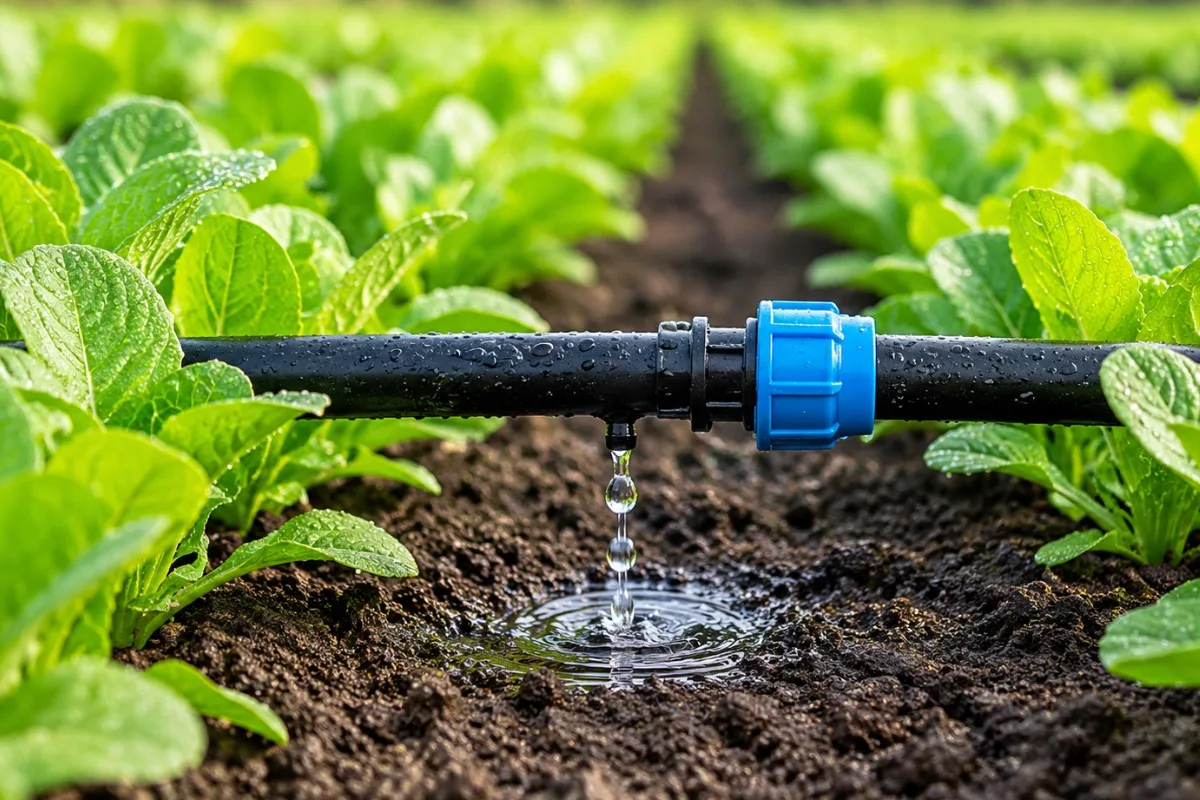
To overcome the climate challenges of the northern territory, SQM provides alternatives aimed at optimizing water and mineral management. This text details how irrigation engineering and specialty fertilizers make it possible to counteract the adverse effects of saline soils.
The Atacama Desert presents extreme conditions that challenge modern agronomy: high ultraviolet radiation, extreme dryness, strong temperature swings, and soils with high salinity levels.
In arid areas such as Tarapacá and Antofagasta, SQM develops specialized nutrition solutions for application via fertigation, soil, and foliar methods, aimed at overcoming the water-related and highly demanding challenges of northern Chile.
Strategies for Mitigating Salt Stress
One of the biggest physiological obstacles for plants in desert areas is salt toxicity, particularly from excess sodium and naturally occurring boron in the soil.
The accumulation of these salts in the root zone generates an induced water deficit, preventing the plant from absorbing water properly.
To counteract this effect, modern agronomic management relies on balanced fertilization. The strategic application of pure sources such as potassium nitrate and calcium nitrate creates a favorable ionic antagonism.
Potassium competes directly with sodium at root uptake sites, reducing its entry into the plant, while calcium helps displace sodium from the irrigation bulb, improving soil structure and efficiently mitigating salt stress.
Integrating Fertigation with Desalinated Water
The scarcity of continental water resources has driven the use of seawater desalinated by reverse osmosis for agricultural purposes.
Although this technology guarantees water availability, it presents physicochemical challenges: desalinated water lacks the basic minerals (such as calcium and magnesium) that fresh water usually provides, and it has a pH that requires precise adjustment.
The success of irrigating with desalinated water lies in precision fertigation. Through automated systems, farmers inject soluble nutrient formulas custom-designed to restore the missing minerals and stabilize pH.
This ensures that high-value crops, such as olive trees, table tomatoes, and grapevines, receive a perfectly balanced nutrient solution drop by drop.
Soluble Nutrition and Hydroponic Solutions
To maximize water efficiency, producing more biomass per drop of water, agricultural models in northern Chile are shifting toward the use of inert substrates and hydroponic systems in controlled environments.
The use of greenhouses with shade nets to mitigate radiation, combined with recirculating hydroponic systems, drastically reduces evaporation.
By using specialty fertilizers that are 100% water-soluble and chloride-free, clogging of irrigation emitters is avoided and the crop is ensured to absorb all of the nutrients, achieving maximum profitability in hyper-arid environments.
Related newsSee all news →
 Sistema de cámaras fortalece la seguridad en el borde costero de Iquique
Rate certificates
Beginning with tax year 2020, Professional Fees Certificates must be requested by email, indicating your name and national identity card number.
Email us at [email protected] to access this information.

Supplier consultation
Dear suppliers:
If you have any questions regarding Purchase Orders (POs), please send us the document in PDF or JPG format (photograph) to the following email address: [email protected].
Please ensure that the PO is legible, especially the following fields: Company Name, order number, and the buyer’s name and contact details.
We will respond to your inquiries within 24 hours.