Farming with Seawater: Research Opening New Possibilities for Desert Agriculture
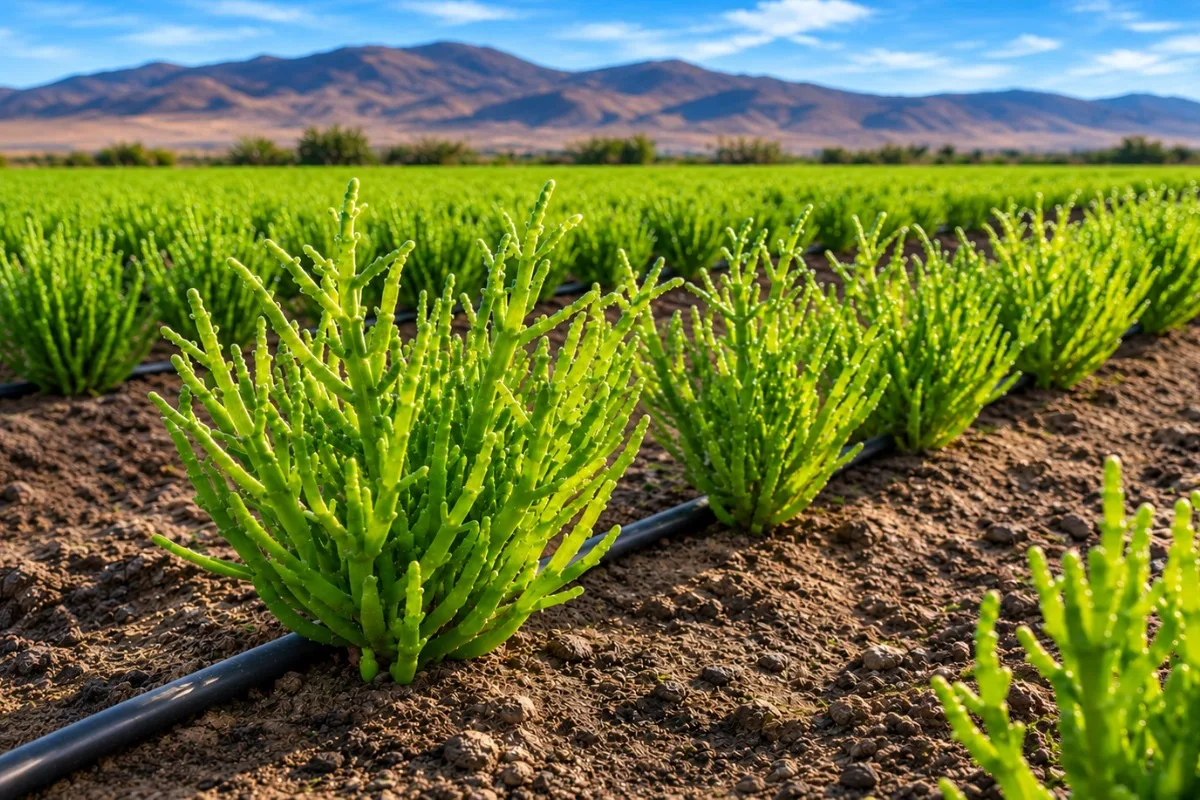
Agricultural research in northern Chile is exploring new ways to produce food in conditions of water scarcity and high salinity. Among the initiatives are trials with salt-tolerant plants, hydroponic systems, and plant nutrition technologies that seek to expand the production possibilities of the desert.
One of the most recent projects studies the cultivation of salicornia, a plant able to grow in saline environments and with potential for human and animal food.
The initiative is being carried out by Universidad Arturo Prat, with support from the Foundation for Agrarian Innovation (FIA), and seeks to evaluate the production of this species using seawater.
According to the FIA information on this project, the research also considers the possibilities of making use of high-salinity water and exploring alternative uses for the discards of desalination plants.
A Plant Adapted to Saline Conditions
Salicornia belongs to the group of halophyte plants, species that have physiological adaptations for growing in environments with high salt concentrations.
This characteristic makes it possible to study production systems different from those used for conventional crops, which generally require water of lower salinity.
The Universidad Arturo Prat project includes the development of a hydroponic system adapted to local conditions, along with nutritional and economic evaluations of the products obtained.
According to the project’s official record, the initiative began in October 2025 and is scheduled to end in September 2027.
Among its objectives are the development of food prototypes and the transfer of knowledge to local producers.
The challenge will be to verify whether the system can maintain satisfactory production and economic results outside experimental conditions.
Plant Nutrition and Salinity Management
Research on salt-tolerant crops is part of a broader field that seeks to understand how plants respond to demanding environmental conditions.
Salinity can hinder water uptake and cause nutritional imbalances. Its effects depend on the cultivated species, the salt concentration, and the length of exposure.
In this context, the study of specialized fertilizers and nutrient solutions makes it possible to evaluate management strategies adapted to different agricultural systems.
SQM takes part in the plant nutrition field through products based on nitrates and other formulations for agricultural applications. SQM develops nutritional solutions and works with producers in crop management programs.
Research in this field makes it possible to study aspects such as the appropriate concentration of nutrients and their availability under different growing conditions.
However, applying fertilizers does not replace the measures needed to control salinity. The FAO warns that managing salt-affected soils must take into account drainage conditions and the quality of the water used.
From Experimental Trial to Agricultural Production
One of the biggest challenges of applied research is moving experimental results into commercial conditions.
A technology may show good results in controlled facilities, but using it on a larger scale requires considering operating costs and maintenance needs.
In the case of hydroponic crops, energy consumption and the management of the nutrient solutions used during the process must also be evaluated.
For species such as salicornia, commercial research is equally relevant. The existence of a technically viable crop does not guarantee that there is enough demand to sustain its production.
The projects currently under way in northern Chile will make it possible to gather background information on these possibilities. Their results could guide future decisions by farmers interested in incorporating species adapted to high-salinity conditions, especially in territories where the availability of fresh water continues to be a constraint on production.
Related newsSee all news →



Rate certificates
Beginning with tax year 2020, Professional Fees Certificates must be requested by email, indicating your name and national identity card number.
Email us at [email protected] to access this information.

Supplier consultation
Dear suppliers:
If you have any questions regarding Purchase Orders (POs), please send us the document in PDF or JPG format (photograph) to the following email address: [email protected].
Please ensure that the PO is legible, especially the following fields: Company Name, order number, and the buyer’s name and contact details.
We will respond to your inquiries within 24 hours.