Agronomic management of kiwifruit: annual cycle and characteristics
Kiwifruit (Actinidia deliciosa) is a deciduous, climbing shrub with separate male and female plants. It produces a berry containing numerous seeds and can live for more than 20 years.
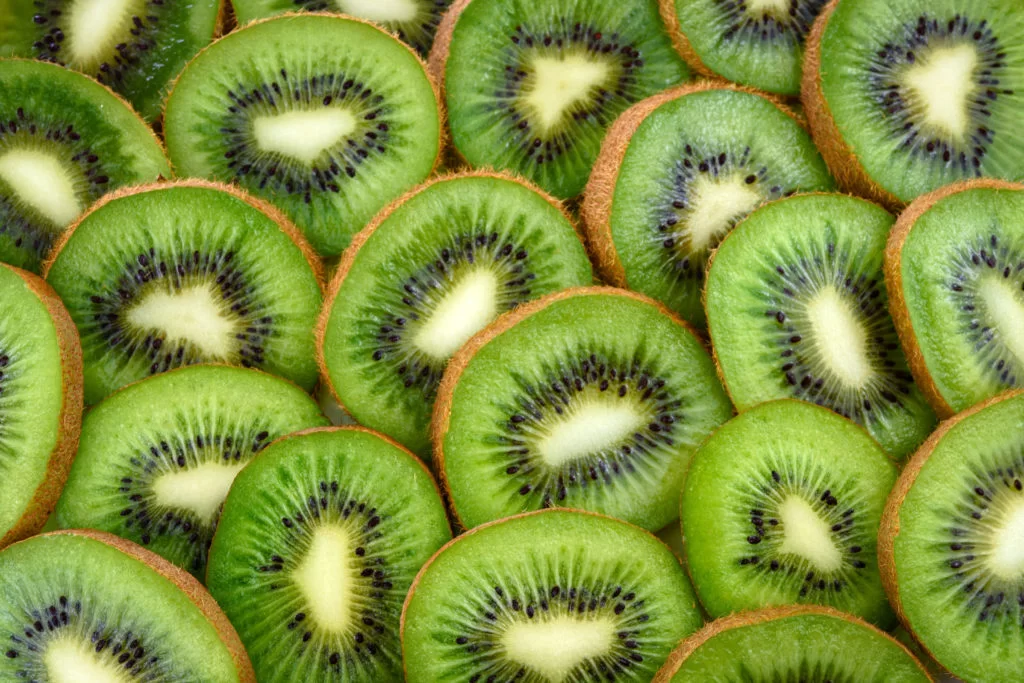
Botanical Characteristics of Kiwifruit
Kiwi (Actinidia deliciosa var. deliciosa C. Liang and A. R. Ferguson) is a deciduous, climbing, and dioecious shrub, with male and female plants occurring separately.
It produces a berry-like fruit with numerous seeds and has a long lifespan: it is a perennial plant that can live for over 20 years in commercial plantations.
Kiwifruit root system: The root system develops mainly within the first 60 cm of soil.
- Low exploratory capacity
High aeration requirement
Succulent and strongly branched structure
Susceptible to dehydrationVulnerability to nematodes of the genus Meloidogyne
Kiwi shoots: Shoots are vigorous but have certain limitations:
- They are brittle in the wind
Very sensitive to frost during the first 30–45 days
Tend to coil when in contact with other shoots or supporting structures, as part of their climbing adaptation
Kiwi flowers: Flowers are functionally unisexual.
- Borne in clusters of 1 to 3 on female plants, and up to 8 on male plants
- Despite being showy, they do not produce nectar.
- Pollen is light and dry, which complicates pollination by bees.
Kiwi fruit: Key fruit characteristics:
- Weight: 90–100 grams
- Pedicel scar closes slowly, making it susceptible to contamination by Botrytis cinerea (causing decay during storage)
- Highly sensitive to ethylene (even at concentrations as low as 0.01 ppm, which accelerates ripening)
- High vitamin C content
Floral initiation in kiwifruit:
- Flowers develop on the first 12 leaf axils of annual shoots emerging from the previous year’s wood
- Floral induction occurs between mid-January and April
- Visible floral differentiation occurs when sprouting resumes at the end of August, after adequate accumulation of winter cold and favorable thermal conditions
- It is common to observe floral aberrations (fan-shaped or flat fruits), which must be removed by manual thinning while still in the bud stage.
Stages of kiwi cultivation and agronomic management
Dormancy
Objective: Accumulation of winter cold
Agronomic management:
- Winter pruning
- Tying up shoots and structures
From Budbreak to Flowering
Physiological processes:
- Floral differentiation
- Natural bud thinning
- Shoot breakage due to wind action
- Agronomic management:
- Thinning of flower buds
- Controlled irrigation
- Fertilization with Nitrogen
Flowering
Key process: First peak in root growth
Agronomic management:
- Green pruning for vegetative control and flowering optimization
Rapid Fruit Growth
Critical period: First 50 days since fruit set
- Fruits reach 50% of their final weight and 75% of their final diameter
Agronomic management:
- Additional green pruning
- Fruit load adjustment
- Potassium fertilization to support development
Slow Growth and Maturity
Fruit evolution:
- Increase in root growth
- Fruits maintain between 4 and 4.5 °Brix
- Seeds change color from white to dark brown
- Once the 5 °Brix threshold is reached, soluble solids increase rapidly, especially with decreasing temperatures
Result: Activation of reserve accumulation
Agronomic management: Harvest at optimal maturity
Post-harvest
Key phase for the following season:
- Maximum accumulation of reserves
- Increased root growth
Critical management points:
- Trunk susceptibility to frost damage
- Leaf drop due to freezing
- Soil improvements (focused on porosity)
- Trunk protection in plants younger than 4 years (especially in female areas)
Related newsSee all news →

Rate certificates
Beginning with tax year 2020, Professional Fees Certificates must be requested by email, indicating your name and national identity card number.
Email us at [email protected] to access this information.
Supplier consultation
Dear suppliers:
If you have any questions regarding Purchase Orders (POs), please send us the document in PDF or JPG format (photograph) to the following email address: [email protected].
Please ensure that the PO is legible, especially the following fields: Company Name, order number, and the buyer’s name and contact details.
We will respond to your inquiries within 24 hours.